Countertop Thickness Explained: Frequently Asked Questions Every Homeowner Should Read
When planning a kitchen or bathroom remodel, most homeowners spend their time comparing countertop materials, colors, and finishes. Yet one design decision can have just as much impact on the final result: countertop thickness. The thickness of a countertop influences not only its appearance but also its structural performance, installation requirements, edge profile options, and overall project cost.
If you’ve been researching standard countertop thickness, you’ve likely noticed that most natural stone and engineered surfaces are available in two primary sizes. While both options can create beautiful countertops, each offers unique advantages depending on your design goals and how the space will be used.
This FAQ guide answers the questions homeowners ask most often, helping you understand the differences between countertop thickness options before making an investment.
What Is the Standard Countertop Thickness?
Answer: The two most common countertop thicknesses used in residential remodeling are 2 centimeters (approximately ¾ inch) and 3 centimeters (approximately 1¼ inches). These dimensions are widely available for quartz, granite, marble, and many other premium countertop materials.
Neither thickness is universally “better.” Instead, manufacturers offer both options because different projects have different structural, aesthetic, and budget requirements. A contemporary bathroom vanity may benefit from the sleek appearance of a thinner slab, while a busy family kitchen often favors the substantial look and strength associated with thicker countertops.
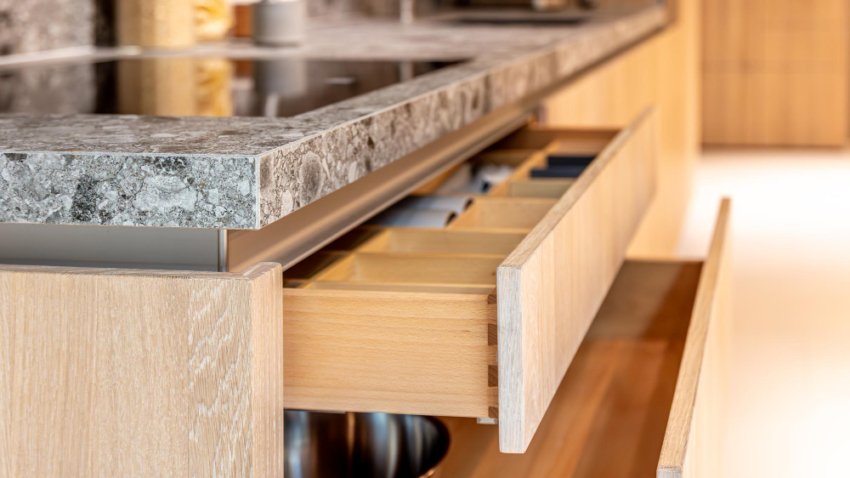
It’s also important to understand that the visible thickness isn’t always the structural thickness. In some projects, fabricators create built-up edges that give a thinner slab the appearance of a thicker profile. This technique allows homeowners to achieve a bold visual effect while controlling material costs and weight.
Professional fabricators also evaluate cabinet construction before recommending a thickness. Strong, properly installed cabinetry provides the foundation needed to support any countertop material safely over the long term.
Quick Summary
- • The most common residential countertop thicknesses are 2 cm and 3 cm.
- • Both options are available in many natural stone and engineered materials.
- • The ideal thickness depends on the room, material, design style, and installation requirements.
- • Built-up edge profiles can create the appearance of thicker countertops when desired.
Which Countertop Thickness Is Better: 2 cm or 3 cm?
Answer: The answer depends on what matters most to you. If your priority is creating a clean, minimalist appearance while reducing overall weight, a 2 cm countertop may be an excellent choice. If you’re looking for a more substantial, furniture-quality appearance with fewer support requirements, many professionals recommend a 3 cm slab.
A 2 cm countertop is often selected for contemporary kitchens, bathroom vanities, and projects where a slimmer profile complements the overall design. Because it is lighter, transportation and handling may be somewhat easier, although additional structural support is sometimes required depending on the material and installation.
By comparison, a 3 cm countertop creates a stronger visual presence. The thicker edge naturally communicates durability and craftsmanship while often eliminating the need for laminated edges or extra reinforcement beneath the slab. This is one reason thicker countertops have become increasingly popular in luxury kitchen renovations.
Rather than choosing solely based on appearance, homeowners should consider how the countertop will be used every day. Kitchens typically experience heavier workloads than bathrooms, making durability and long-term performance important considerations alongside aesthetics.
| Feature | 2 cm Countertop | 3 cm Countertop |
|---|---|---|
| Thickness | Approximately ¾ inch | Approximately 1¼ inches |
| Appearance | Slim, contemporary profile | Substantial, premium appearance |
| Weight | Lighter | Heavier |
| Cabinet Support | May require additional reinforcement | Often requires less additional support |
| Typical Applications | Bathrooms, contemporary kitchens, modern designs | Family kitchens, luxury remodels, high-use spaces |
Ultimately, both thicknesses can perform exceptionally well when paired with quality materials, professional fabrication, and proper installation. The best choice is the one that complements your home’s design while supporting the way you use your space every day.
Does Countertop Thickness Depend on Material?
Answer: Yes. While standard countertop thickness is often available in both 2 cm and 3 cm options, the material you choose plays a significant role in determining which thickness is most appropriate for your project. Structural characteristics, fabrication methods, and intended use all influence the final recommendation.
Quartz is one of the most versatile countertop materials because manufacturers commonly produce it in both standard thicknesses. Homeowners can often choose between a sleek contemporary appearance or a thicker, more substantial profile without sacrificing durability.
Granite and marble are also frequently available in both 2 cm and 3 cm slabs. However, because every natural stone slab differs slightly in veining, density, and strength, professional fabricators carefully evaluate each piece before fabrication and installation.
Laminate countertops differ from natural stone and engineered surfaces. Rather than relying on a thick slab, laminate is typically manufactured as a thinner decorative surface bonded to an engineered substrate. As a result, its visible thickness is created through construction methods rather than solid material.
Solid surface materials vary by manufacturer, with different thicknesses available depending on the intended application and fabrication techniques.
Quick Summary
- • Quartz: Commonly available in both 2 cm and 3 cm.
- • Granite: Available in both standard thicknesses depending on the slab.
- • Marble: Offered in multiple thicknesses based on design requirements.
- • Laminate: Typically uses a thinner decorative surface over a core material.
- • Solid Surface: Thickness varies according to manufacturer specifications.
Ultimately, material selection and countertop thickness should always be evaluated together rather than as separate decisions.
How Does Thickness Affect Cost?
Answer: Countertop thickness influences project costs in several ways, but the material itself, fabrication complexity, and installation requirements often have an even greater impact than thickness alone.
A thicker slab naturally contains more material, which may increase fabrication costs. In addition, heavier countertops require more careful transportation, handling, and installation. Larger kitchens or oversized islands may also involve additional labor because of the increased weight.
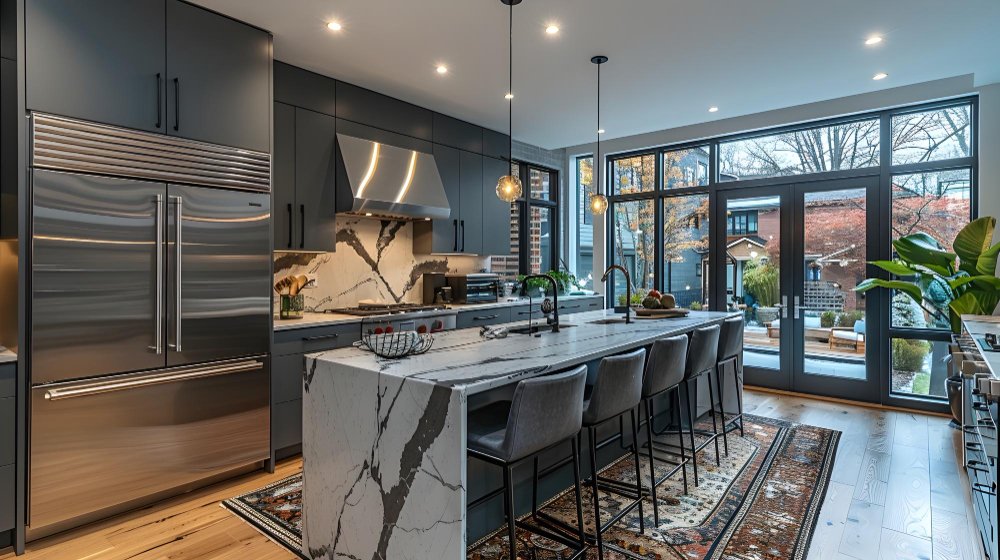
Edge profiles contribute to the overall budget as well. Decorative edges, waterfall installations, and custom fabrication typically require additional craftsmanship regardless of whether the countertop measures 2 cm or 3 cm.
Instead of asking which thickness is less expensive, homeowners should consider which option provides the best long-term value. A countertop that complements the cabinetry, supports daily use, and maintains its appearance over many years often represents a better investment than choosing solely based on initial cost.
What Should Homeowners Consider Before Choosing?
Answer: Selecting the ideal countertop thickness requires balancing aesthetics, functionality, structural support, and budget. Rather than focusing on a single feature, consider how the countertop will perform as part of the overall kitchen or bathroom design.
Questions worth discussing with your designer or fabricator include:
- Will the countertop be installed in a kitchen or bathroom?
- Does the cabinetry provide adequate structural support?
- Which countertop material best fits your lifestyle?
- Do you prefer a sleek modern profile or a thicker luxury appearance?
- Will the design include waterfall edges or oversized islands?
- What level of maintenance are you comfortable with?
- Does the project budget support premium fabrication details?
Professional installation is equally important. Even the highest-quality countertop will not perform as intended if cabinets are uneven, seams are poorly aligned, or support requirements are overlooked. Experienced fabricators evaluate these details before installation begins, helping ensure both long-term durability and an exceptional finished appearance.
Quick Summary
- • Match countertop thickness to the material and intended use.
- • Consider cabinet strength before selecting heavier slabs.
- • Evaluate edge profiles early in the design process.
- • Focus on long-term value rather than initial cost alone.
- • Work with experienced professionals for accurate fabrication and installation.
Understanding countertop thickness helps homeowners make informed remodeling decisions that extend beyond appearance alone. While 2 cm countertops offer a refined, contemporary profile and 3 cm slabs deliver a more substantial, premium look, both options can provide excellent performance when paired with the right material and proper installation.
The ideal standard countertop thickness depends on your lifestyle, design preferences, cabinet construction, and overall remodeling goals. By comparing materials, evaluating structural requirements, and working with experienced professionals, you can confidently choose a countertop that enhances both the beauty and functionality of your home for many years to come.