Multi-Ply Roofing: A Commercial Roof Upgrade from Recurring Repairs to Layered Protection
Recurring commercial roof leaks rarely begin as a replacement project. More often, they begin with a repair request: find the opening, stop the water, and keep the building operating. This representative case study follows that familiar progression and shows how an aging low-slope roof can move from repeated patching toward a more systematic Multi-Ply Roofing strategy. The scenario reflects common commercial roofing conditions rather than a specific Higher Level Roofing customer project, allowing the decision-making process to be examined without presenting invented project results as fact.
The central lesson is straightforward: the turning point wasn’t simply choosing a different roofing material. It was changing the way the roof was evaluated—from a collection of individual leaks into one interconnected building system.
The Situation: An Aging Low-Slope Commercial Roof
The representative property is a large occupied commercial facility with an existing low-slope roofing assembly. Over time, maintenance records begin showing a familiar pattern. A leak appears near one section of the building, a localized repair is completed, and normal operations resume. Months later, another problem develops elsewhere.
None of the individual repairs initially suggests that complete replacement is necessary. However, as service visits accumulate, facility management begins spending more time responding to roofing concerns and less time planning preventive maintenance.
The roof also supports multiple pieces of mechanical equipment, which means service technicians regularly cross the surface. Drains and penetrations create additional critical details, while previous repairs make the condition of certain areas more difficult to interpret from visual observation alone.
| Before | After Strategic Evaluation |
|---|---|
| Leaks addressed individually | Complete roof assembly evaluated |
| Maintenance driven by interior symptoms | Condition-based planning established |
| Limited historical context | Repair history incorporated into assessment |
| Drainage considered during individual repairs | Drainage evaluated as part of roof performance |
The Challenge: Recurring Repairs Were No Longer the Whole Answer
The challenge was not proving that the roof had problems—the repair history already established that. The more important question was whether those problems remained sufficiently localized to justify continued repair or whether they represented broader deterioration within the assembly.
A comprehensive evaluation therefore expanded beyond the latest leak location. The roof field, flashing, drains, penetrations, perimeter conditions, surfacing, rooftop traffic areas, and accessible underlying components all became part of the investigation. Particular attention was given to locations with repeated repair history.
This changed the decision from a simple “repair or replace” choice into three potential paths: continued localized repair, restoration where conditions allowed, or replacement if deterioration proved too extensive for either alternative to provide reasonable long-term reliability.
METRICS SUMMARY: DECISION FRAMEWORK
- 1 complete roof condition assessment
- 3 major paths evaluated: repair, restoration, replacement
- 4+ critical detail categories reviewed: drainage, flashing, penetrations, and perimeter conditions
- 1 objective: address causes rather than continue treating isolated symptoms
The Solution: Designing a Multi-Ply Roofing Strategy
For this representative scenario, the broader evaluation supports moving beyond repeated localized repairs and planning a replacement assembly. Importantly, material selection occurs after the condition assessment—not before it.
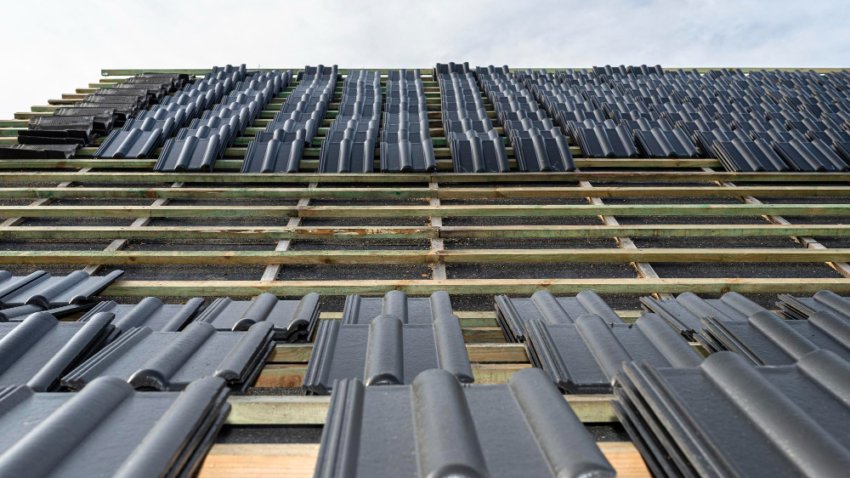
A built-up approach is evaluated because its multi-ply construction aligns with the property’s priorities. BUR develops waterproofing through reinforcing plies incorporated with bituminous materials, creating redundancy within the assembly. Appropriate insulation, flashing, drainage details, attachment, and protective surfacing must then be coordinated with that waterproofing strategy.
The project team also considers alternative commercial systems rather than assuming an existing built-up roof must automatically be replaced with another BUR assembly. Only after comparing structural conditions, rooftop operations, installation logistics, maintenance expectations, and building requirements does the multi-ply approach remain the preferred strategy for this scenario.
This is where understanding professional Bitumen Roofing Systems becomes particularly important. Bitumen and reinforcing materials are not treated as isolated products; their value comes from how they are integrated into the complete roof assembly.
PROJECT TIMELINE
Phase 1 — Condition Assessment: Review leak history, roof field, drainage, flashing, penetrations, and accessible underlying conditions.
Phase 2 — Scope Development: Compare repair, restoration, and replacement according to documented findings.
Phase 3 — System Design: Coordinate multi-ply waterproofing with insulation, drainage, flashing, rooftop equipment, and building requirements.
Phase 4 — Installation: Prepare appropriate substrates and construct the specified roofing assembly in controlled stages.
Phase 5 — Closeout: Complete final inspection, document the new baseline condition, and establish a preventive maintenance strategy.
The Results: From Reactive Repairs to Planned Roof Management
The most important result in this representative case is not a fabricated percentage improvement or an unsupported claim about service life. It is a measurable change in how the commercial roof can be managed. Before the project, roofing decisions were largely triggered by visible symptoms. After the new strategy is established, the facility has a documented roof condition, defined maintenance priorities, and a clear starting point for future inspections.
Drainage is no longer considered only when water becomes a problem. Drains and related pathways become part of routine condition reviews. Flashing and penetrations can be tracked over time, while rooftop access can be managed more intentionally around mechanical equipment and common service routes.
The new multi-ply assembly also provides a more coherent maintenance baseline. Instead of inheriting years of repairs with varying documentation, facility management can record changes from the completion of the project forward.
| Performance Area | Before | After |
|---|---|---|
| Roof Management | Reactive | Planned and documented |
| Condition Baseline | Complicated by accumulated repairs | New documented starting condition |
| Drainage | Often reviewed in response to problems | Integrated into ongoing inspection strategy |
| Rooftop Activity | Limited tracking | Greater emphasis on access and documentation |
| Maintenance Decisions | Driven primarily by leaks | Driven by inspection findings and observed changes |
RESULTS: OPERATIONAL IMPROVEMENTS
- ✓ A complete roof condition baseline is established.
- ✓ Reactive patching is replaced by a planned maintenance framework.
- ✓ Drainage, flashing, and penetrations receive defined inspection attention.
- ✓ Rooftop work can be documented from the new system’s starting point.
- ✓ Future repair decisions can reference a clearer maintenance history.
These results are deliberately operational rather than financial. Without actual project records, energy bills, repair invoices, moisture surveys, and long-term performance data, assigning percentages to cost savings, efficiency, or expected lifespan would create precision that the evidence does not support.
Key Lessons: What Commercial Owners Can Take from the Case
The first lesson is that recurring leaks should be treated as information. One isolated leak may justify a straightforward repair. Multiple problems developing across different roof areas should encourage a broader investigation into the condition of the complete assembly.
The second lesson is that replacement should not begin with material selection. Starting with “We need another BUR roof” or “We want to switch to single-ply” puts the solution ahead of the diagnosis. Existing conditions, structural requirements, moisture, drainage, rooftop operations, installation logistics, and maintenance goals should shape the system recommendation.
The third lesson is that multi-ply construction does not eliminate the importance of details. A substantial roof field still depends on properly resolved drains, penetrations, perimeter conditions, flashing, and transitions. The benefits of layered waterproofing are strongest when the entire assembly is coordinated around them.
FINAL METRICS SUMMARY
3 decisions evaluated: Repair → Restoration → Replacement
5 project phases: Assessment → Scope → Design → Installation → Closeout
4 recurring inspection priorities: Drainage → Flashing → Penetrations → Roof field
1 long-term objective: Move commercial roof management from emergency response toward documented preventive maintenance.
Finally, the case demonstrates why the project does not truly end at installation. A new roof creates an opportunity to establish inspection routines, control rooftop traffic, preserve project documentation, and respond to developing conditions while they remain manageable.
For a commercial property owner, that shift may be one of the most valuable outcomes of the entire process. The roof stops being something considered primarily when water enters the building and becomes an asset whose condition can be inspected, documented, and managed deliberately.
That is the broader value of a well-planned multi-ply roofing strategy: not simply replacing an aging surface, but creating a more informed framework for protecting the commercial building beneath it.